

7 Tips for Choosing a Low Noise Generator Set
Choosing a Low Noise Generator Set is not simply a matter of finding the lowest decibel number.
In real projects, sound changes with load, distance, weather, and installation. A unit rated at 60 dB(A) may sound different beside a hotel wall. It may also become louder when powering air-conditioning equipment at full demand. Dr. David A. Bies, a respected noise-control engineer, stated, “Noise is unwanted sound.” That short definition remains useful. It reminds buyers to measure disturbance where people actually experience it.
This guide presents seven practical tips for selecting a Low Noise Generator Set with greater confidence. It examines verified sound ratings, acoustic enclosures, engine speed, cooling airflow, vibration control, fuel efficiency, and service access. These details matter in hospitals, offices, residential sites, outdoor events, and construction areas. A thick enclosure can reduce engine noise, but poor ventilation may increase heat and maintenance problems. Quiet operation still needs safe airflow.
Look beyond the brochure.
Ask whether the manufacturer tested the set under a stated load and at a stated distance. Check whether the quoted figure uses dB(A), because human hearing does not respond equally to every frequency. Inspect rubber mounts, exhaust silencers, intake paths, and cooling fans. Small design choices can affect nighttime comfort.
No selection method is perfect. I have seen buyers focus heavily on noise ratings and overlook fuel use or technician access. That mistake can become expensive later. The best choice balances quiet performance, dependable output, operating cost, installation conditions, and long-term support.
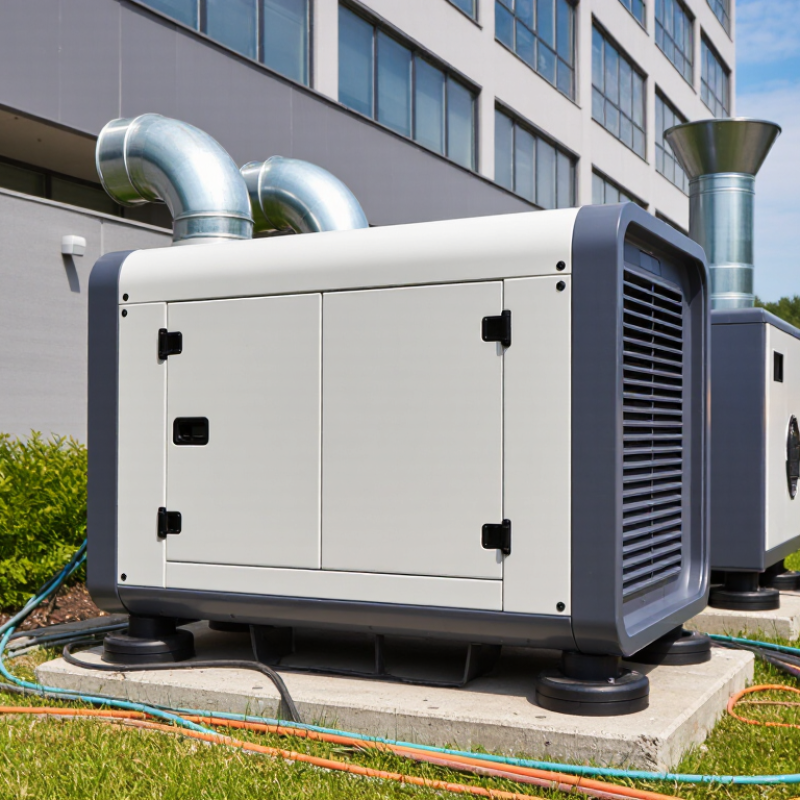
What Makes a Generator Set Quiet and Suitable for Your Application
7 Tips for Choosing a Low Noise Generator Set
What Makes a Generator Set Quiet and Suitable for Your Application
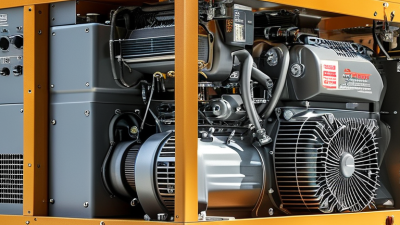
A quiet generator set controls several noise sources at once. The engine produces combustion and mechanical sounds. The alternator and cooling fan add their own tones. A well-designed acoustic enclosure reduces these sounds without blocking airflow. Check the stated noise level in decibels, and confirm the testing distance. A reading at seven metres may not match conditions beside a building.
In field inspections, I look for thick acoustic panels, sealed access doors, and flexible engine mounts. These details reduce vibration through the frame and floor. A large, slow-turning fan can also lower harsh airflow noise. However, quieter operation may affect heat removal if the enclosure is poorly designed. Ventilation deserves careful attention.
The load profile matters too. Some sets become noticeably louder during rapid load changes. A model with intelligent speed control may run more quietly during light demand. For hospitals, offices, schools, or residential projects, ask about low-frequency noise. It can travel through walls and feel like a steady hum.
Measure the actual site.
Place the set away from windows and reflective walls when possible. Do not rely on a brochure alone. I have seen a quiet rating become disappointing after installation because the set sat on a concrete corner. A site test, vibration review, and maintenance check provide more dependable evidence. A removable enclosure panel is useful, but poorly fitted panels can create leaks and rattling sounds.
7 Tips for Choosing a Low Noise Generator Set - What Makes a Generator Set Quiet and Suitable for Your Application
| Tip | Selection Factor | Typical Data or Target | Why It Reduces Noise | Suitable Applications |
|---|---|---|---|---|
| 1 | Check the sound-pressure rating | Prefer approximately 60–70 dB(A) at 7 m for applications requiring low noise. Standard open-frame units may be around 70–85 dB(A) at the same distance. | A lower dB(A) rating means reduced perceived sound pressure. A 10 dB reduction is generally perceived as about half as loud by people. | Residential areas, offices, schools, hospitals, hotels, and sound-sensitive events. |
| 2 | Choose the correct enclosure design | Acoustic weatherproof enclosures commonly use approximately 40–100 mm of sound-absorbing material, depending on generator size and design. | A sealed enclosure with acoustic lining blocks and absorbs engine, alternator, fan, and exhaust noise while protecting the set from weather. | Outdoor standby power, construction sites, temporary power, and installations near occupied buildings. |
| 3 | Select an appropriate engine speed | A 1,500 rpm engine is normally used for 50 Hz, four-pole generation; a 1,800 rpm engine is normally used for 60 Hz, four-pole generation. Smaller high-speed engines may operate near 3,000 or 3,600 rpm. | Lower rotational speed generally reduces mechanical vibration, tonal noise, and exhaust pulse frequency, although the final result depends on engine and enclosure design. | Continuous operation, healthcare facilities, commercial buildings, and locations with strict noise limits. |
| 4 | Verify the exhaust silencer and airflow system | Residential and commercial installations often require a critical-grade or hospital-grade silencer, subject to back-pressure limits specified by the engine manufacturer. | The silencer reduces exhaust pulse noise, while correctly sized intake and discharge paths prevent excessive fan noise and turbulent airflow. | Urban sites, rooftops, campuses, healthcare facilities, and generators installed close to property boundaries. |
| 5 | Look for vibration isolation | Anti-vibration mounts are commonly selected to provide approximately 90–95% isolation efficiency when correctly matched to the set weight and operating speed. | Flexible mounts reduce the transfer of engine vibration into the foundation, floor, walls, and nearby structures. | Buildings, rooftops, recording or broadcast facilities, laboratories, and installations near offices or residences. |
| 6 | Match generator capacity to the actual load | For efficient operation, many applications target approximately 50–80% of the generator's rated load during normal running, while allowing for starting current and future expansion. | Correct sizing avoids excessive engine speed changes, unstable operation, wet stacking from prolonged light loading, and unnecessary fuel and exhaust noise. | Backup power systems, data rooms, retail sites, workshops, and mixed electrical loads. |
| 7 | Evaluate installation distance and maintenance needs | Sound pressure decreases as distance increases. Under ideal free-field conditions, doubling the distance can reduce sound pressure by about 6 dB; walls, reflections, wind, and terrain can change the actual result. | Correct placement, barriers, ducting, and regular maintenance prevent reflected noise, loose-panel rattling, clogged filters, and excessive fan or exhaust sound. | Permanent installations, compact sites, noise-controlled zones, and projects with nearby neighbors. |
Note: Sound levels are typical engineering ranges rather than guaranteed values. Actual performance depends on generator size, load, measurement distance, site conditions, enclosure design, and local noise regulations. Always compare ratings measured using the same standard and test conditions.
Related Posts
-
How to Choose the Right Generator Set for Your Power Needs?
-
Top Low Noise Generator Set for Your Global Sourcing Needs?
-
Top Low Noise Generator Sets in China for Global Buyers?
-
How to Choose a Low Noise Generator Set?
-
Top Silent Generator Set Benefits and Applications for Quiet Power Solutions?
-
2026 Best Silent Generator Set for Your Power Needs?