2026 How to Choose the Right Generator Set for Your Needs?
Choosing the right Generator Set is critical in today's energy-driven world. With an increasing demand for reliable power solutions, understanding specific needs can make a significant difference. Industry data indicates that the global generator set market is projected to reach $23 billion by 2026. This growth reflects the rising focus on low-emission power solutions and renewable energy integration.
According to expert Thomas C. Wright, a leading figure in the generator set industry, “Selecting the right generator is not just about power output; it’s about operational efficiency and adaptability.” This statement emphasizes the need for careful consideration of various factors, including power capacity, fuel type, and operational costs.
In a world where energy reliability is paramount, the decision-making process can feel overwhelming. Many buyers face challenges in evaluating the unique features of various generator sets. It's essential to reflect on specific applications and environments to determine the best fit. Making decisions solely based on price can lead to future regrets, highlighting the importance of thorough research.
Understanding Your Power Requirements for Generator Selection
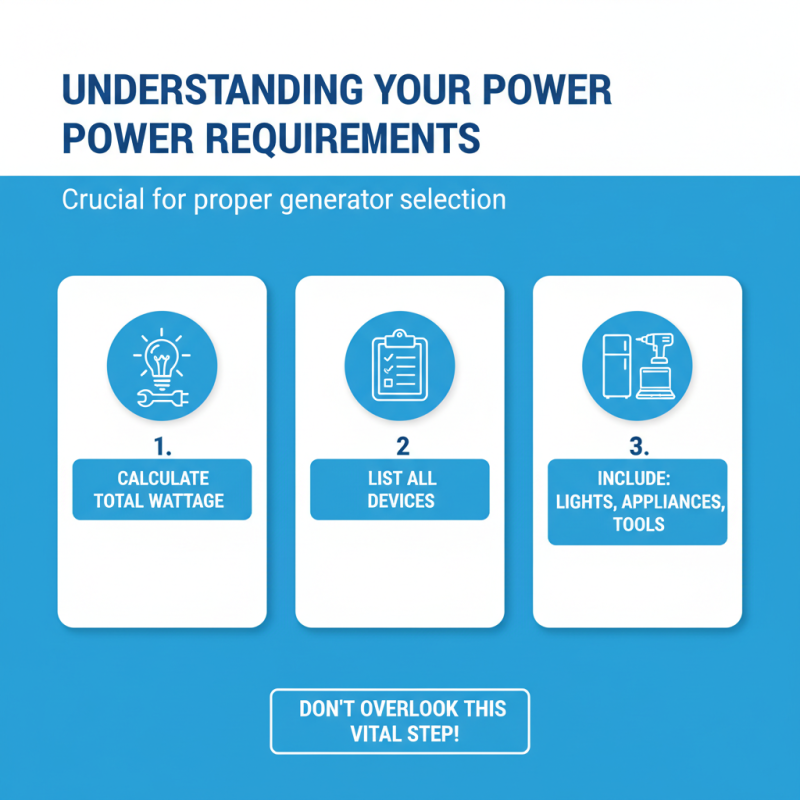
When selecting a generator set, understanding your power requirements is crucial. Start by calculating the total wattage needed. List all devices you plan to connect. Include lights, appliances, and tools. This step is often overlooked but vital for proper selection.
Consider your peak and running wattage. Some devices require more power when starting. For example, a refrigerator could need double the starting wattage. Make sure your generator meets this demand. Evaluate how long you'll need power. Is it for a few hours or several days? This will influence the size of the fuel tank you'll require.
Think about future needs too. Will your power requirements grow? Planning for an upgrade is wise. Sometimes we forget to account for all the possible devices. A simple mistake can lead to inefficiency. Choose a generator that suits both current and future needs. This way, you ensure you’re always prepared for unexpected power outages.
Types of Generator Sets and Their Applications
Choosing the right generator set can be daunting. Different types serve various applications. Understanding these types helps make an informed decision.
Portable generators are ideal for small-scale needs. They provide power for tools or campsite appliances. Their mobility makes them perfect for short-term use. However, they often lack the capacity for larger demands. This can lead to frustration if the power needed exceeds their limit.
On the other hand, standby generators offer a more robust solution. They automatically kick in during power outages. These generators are ideal for homes and businesses. However, their installation can be complex and costly. Users might find themselves overwhelmed by maintenance requirements, too. Not everyone may need such power. It's essential to reflect on actual usage needs before making a choice.
2026 How to Choose the Right Generator Set for Your Needs?
| Generator Type |
Power Output (kW) |
Fuel Type |
Applications |
Run Time (hrs) |
| Portable Generator |
2 - 10 |
Gasoline |
Camping, DIY Projects |
8 - 12 |
| Inverter Generator |
1 - 3 |
Gasoline |
Sensitive Electronics |
3 - 8 |
| Diesel Generator |
10 - 300 |
Diesel |
Construction, Hospitals |
24 - 48 |
| Solar Generator |
1 - 10 |
Solar |
Emergency Backup, Off-Grid |
Variable |
| Standby Generator |
5 - 150 |
Natural Gas, Propane |
Home Backup |
Unlimited (with fuel) |
Key Features to Consider When Choosing a Generator
When choosing a generator set, understanding its key features is essential. Consider the power output needed. How much wattage do you require? This dictates the type and size of the generator. Look for models that provide different power ratings. Balanced output is vital for sensitive electronics. Don't overlook the fuel type. Diesel, gasoline, or propane? Each has its advantages and limitations.
Noise level can be a drawback. Some generators run loud, while others remain quiet. If you live in a residential area, this can be a significant factor. Consider emission standards too. Compliance with regulations is crucial. Always check dimensions and weight. Will it fit where you plan to use it?
Here are some tips. Always assess how portable you need it to be. A heavy unit may be less convenient. Look for one with good reviews about reliability. Quality matters. Lastly, think about maintenance. A generator requires care. Understand what that entails before making a choice. Reflect on these aspects thoroughly. You want this investment to serve you well.
2026 How to Choose the Right Generator Set for Your Needs?
Assessing Fuel Options for Efficiency and Availability
When selecting a generator set, fuel options play a crucial role. Different fuels offer varying levels of efficiency and availability. For instance, diesel generators are known for their robustness and fuel efficiency. However, they may not be as readily available in some areas. Gasoline is another option, but it can be less efficient compared to diesel.
Consider your location. Is diesel easy to find? Are there refueling stations nearby? These questions matter. Natural gas might be suitable too. It burns cleaner, but accessibility needs investigation. Each fuel type has its pros and cons, making it essential to evaluate based on your specific needs.
**Tips:**
Choose a generator that matches the fuel supply in your area. Research local availability. Assess the environmental impact of your fuel choice. This reflection is important for a sustainable future. Make an informed decision. Don't overlook the possibility of fuel costs fluctuating over time. These details shape your long-term investment.
Budgeting for Purchase and Maintenance of Generator Sets
When it comes to purchasing a generator set, budgeting is crucial.
Consider your initial purchase cost carefully. The price of a generator can vary significantly.
Know your financial limits, and plan accordingly. Additionally, allocate funds for installation.
Professional help may be necessary.
Maintenance costs are another important factor.
Regular servicing can prevent costly repairs in the long run. It is wise to set aside a portion of your budget for routine maintenance.
Don't neglect this aspect, as failure to maintain your generator can lead to major problems.
Tips: Always compare different models and their efficiencies.
A cheaper unit may cost more in fuel and repairs. Research the long-term costs involved with different options.
Keep track of all expenses related to your generator. Regularly review your budget to stay on track.
Remember, unexpected issues can arise, so having a contingency fund is a smart move.