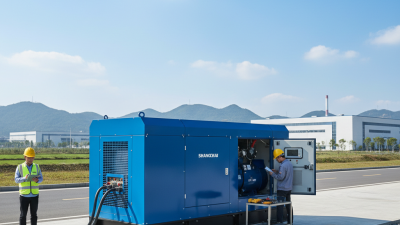

Choosing a Perkins Generator Set is not simply a price comparison. Global buyers need dependable power, verified specifications, and responsive after-sales support.
A suitable supplier should provide original Perkins engines, clear alternator details, documented factory testing, and practical installation guidance. It should also explain fuel consumption under different loads. A showroom photograph is not enough. Ask for serial-number verification, warranty conditions, spare-parts availability, and service records.
Tom Nankervis, a senior Perkins Engines executive, has emphasized, “The right engine is only part of the solution; dependable support matters just as much.” This view reflects a common purchasing reality. A generator may run smoothly in a factory test, yet create problems if local technicians lack training. That gap matters in remote mines, hospitals, construction sites, and unstable-grid regions.
This guide examines seven Perkins Generator Set suppliers serving international buyers. It considers product range, customization, certifications, delivery experience, technical support, and long-term operating value. Some suppliers appear strong on manufacturing capacity. Others perform better through regional service networks. Few excel everywhere.
The ranking is not absolute. Buyer requirements differ. A 500 kVA standby unit for a hotel needs different support from a continuous-duty set in West Africa. Currency risks, shipping delays, and incomplete documentation can also affect the final decision. These details are easy to overlook.
Good sourcing requires verification. Contact references. Review testing documents. Confirm who answers after installation. Reliable power begins before the generator reaches the site.
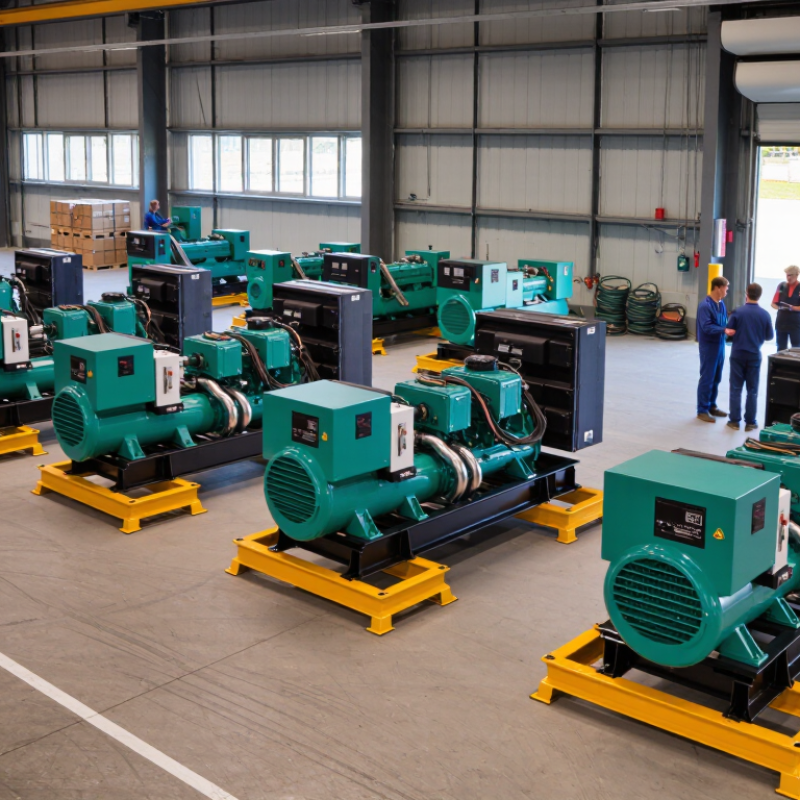
Diesel generator sets use an engine, alternator, control panel, and cooling system to produce dependable backup power. Their output commonly ranges from small portable units to large industrial systems. A properly matched set can support hospitals, factories, construction sites, farms, and data facilities. It can also protect refrigeration, pumps, elevators, and communication equipment during grid failures.
Load demand matters greatly. A unit running below its suitable load for long periods may experience poor combustion and carbon buildup. An undersized unit may overheat, trip, or fail during motor starting. Professional suppliers therefore review starting currents, operating hours, altitude, ambient temperature, and fuel conditions before recommending a model. Noise control, automatic transfer switching, remote monitoring, and weather-resistant enclosures improve practical performance. Small details matter.
Maintenance remains unavoidable. Filters, coolant, batteries, belts, and lubricants need scheduled inspection. Dusty sites require shorter service intervals. A generator may look powerful on paper, yet perform poorly when ventilation is restricted. That assumption is not always right. Buyers should request verified fuel-consumption data, factory test records, warranty terms, spare-parts support, and local technician availability. Field experience often exposes gaps that brochures do not mention. A realistic application review is more valuable than choosing the largest available unit.
The chart shows representative generator-set output levels commonly used for different application categories. Actual sizing depends on connected load, motor starting current, duty cycle, redundancy requirements, and local regulations.
Global buyers should evaluate generator set suppliers against evidence, not polished catalogs. The International Energy Agency’s Electricity 2024 report projects data-center electricity demand may more than double by 2026. That pressure makes dependable standby power increasingly important. Ask each supplier for factory test records, load-bank results, service response times, and spare-parts locations. ISO 8528 performance ratings should match your site’s prime or standby duty. A low purchase price can become expensive when filters, controllers, or alternators require overseas shipping.
Supplier experience also needs practical testing. Request references from projects operating in climates similar to yours. A coastal installation faces salt corrosion, while a mining site may require stronger dust protection. Check fuel-consumption curves at 25%, 50%, and 75% load. They reveal more than a maximum output figure. The Uptime Institute’s Global Data Center Survey has repeatedly linked serious outages with major financial consequences, although reported costs vary widely by facility. This supports a careful review of redundancy, commissioning, and maintenance support. A spreadsheet alone can mislead. I still see buyers compare only kilowatts and warranty length. That is not enough. Evaluate technician training, remote monitoring security, emissions documentation, and local regulatory support. Require clear exclusions in the warranty. Ambiguous wording often causes avoidable disputes. Shortlisted suppliers should explain how they will test automatic transfer, cold starts, battery charging, and twelve-hour fuel autonomy before shipment.
| No. | Evaluation Dimension | What a Strong Supplier Should Demonstrate | Recommended Verification Data | Suggested Weight | Global Purchasing Decision Rule |
|---|---|---|---|---|---|
| 1 | Product and Power Range | Can configure diesel generator sets for the required standby or prime-power duty, voltage, frequency, phase, and site conditions. | Technical datasheet, load schedule, single-line diagram, alternator data, and derating calculation for altitude and ambient temperature. | 20% | Reject proposals that do not match the required continuous or standby rating after environmental derating. |
| 2 | Authorization and Supply Chain | Provides traceable engine, alternator, controller, and major-component sourcing with clear responsibility for system integration. | Current authorization or distribution evidence where applicable, serial-number traceability, country of origin, and component list. | 15% | Prefer suppliers able to document the complete configuration and provide a single accountable point of contact. |
| 3 | Compliance and Certification | Understands the destination market’s electrical, emissions, safety, noise, and import requirements instead of offering one universal specification. | Applicable conformity declarations, test reports, factory quality certificates, emissions documentation, and local code checklist. | 15% | Award points only for documents applicable to the actual destination country and final installation. |
| 4 | Engineering and Customization | Can adapt enclosures, fuel systems, automatic transfer arrangements, synchronizing controls, remote monitoring, and installation interfaces. | General arrangement drawing, wiring diagram, foundation loads, ventilation calculation, fuel-consumption curve, and interface schedule. | 15% | Give priority to suppliers that identify site risks and submit engineered drawings before production. |
| 5 | Factory Testing and Quality Control | Uses documented inspection and testing procedures covering assembly, insulation, protection settings, load performance, and final visual quality. | Inspection and test plan, routine test report, load-bank test record, calibration certificates, packing inspection, and photographic evidence. | 15% | Require signed test records and agreed acceptance criteria before shipment, especially for critical-power projects. |
| 6 | After-Sales Service and Spare Parts | Offers commissioning, operator training, troubleshooting, preventive-maintenance guidance, and a practical spare-parts plan. | Service organization chart, response procedure, recommended spare-parts list, warranty terms, maintenance schedule, and escalation contacts. | 10% | Select suppliers with documented remote support and locally available or reliably exportable maintenance parts. |
| 7 | Commercial Terms and Total Cost | Provides transparent pricing and explains the total cost of ownership, including transport, installation, commissioning, fuel use, maintenance, and warranty exclusions. | Itemized quotation, Incoterms® rule, lead time, payment schedule, packing details, fuel-consumption data, warranty scope, and lifecycle-cost estimate. | 10% | Compare equivalent technical configurations and use landed cost plus expected operating cost rather than purchase price alone. |
| Total Evaluation Weight | 100% | Use a documented scorecard and verify all critical claims before placing the purchase order. | |||
Global buyers can compare seven leading supplier types by their practical strengths.
Supplier One is a factory-direct integrator, offering competitive pricing and customized control panels.
Supplier Two is a certified regional distributor, valued for genuine parts and local service coverage.
Supplier Three focuses on rental fleets, providing fast delivery, flexible output ratings, and simple maintenance access.
Supplier Four serves construction companies with rugged enclosures, mobile frames, and strong dust protection.
Supplier Five specializes in data centers and hospitals. Its strength is stable voltage control, redundant systems, and detailed testing records.
Supplier Six supports marine and remote projects, supplying corrosion-resistant cabinets, fuel monitoring, and extended-run packages.
Supplier Seven operates as an engineering contractor, coordinating load studies, installation, commissioning, and operator training. This support can reduce costly sizing mistakes.
A reliable supplier should provide factory test reports, serial-number traceability, warranty terms, and clear response times. Ask for service references from sites with similar climates and operating hours. A supplier that answers technical questions precisely is usually safer than one offering only a low price.
Field inspections also matter. Check cable routing, ventilation space, battery condition, and emergency-stop access before acceptance.
No supplier is perfect. Some distributors have excellent parts support but limited design expertise. Others offer impressive engineering yet respond slowly after delivery. Buyers should examine those weaknesses before signing.
Global buyers assessing Perkins generator set suppliers should examine compliance beyond the engine name. ISO 8528 provides a framework for generator performance, ratings, and testing. ISO 9001 certification also indicates controlled production and documented quality procedures. However, a certificate is not proof of every shipment. Buyers should request its scope, validity, and issuing body.
Export experience matters just as much. The UNCTAD Review of Maritime Transport 2023 reports that more than 80% of global merchandise trade by volume moves by sea. Suppliers should therefore provide accurate commercial invoices, packing lists, certificates of origin, and export-worthy packaging. Crated equipment needs moisture protection, lifting marks, and clear serial-number records. Small errors can delay customs clearance.
Environmental and workplace controls deserve equal attention. The ISO Survey 2022 recorded more than 1.26 million ISO 9001 certificates worldwide, showing broad adoption of quality systems, but adoption does not guarantee technical competence. Ask for factory acceptance test results, load-bank records, calibration certificates, and emissions documentation for the destination market. Independent inspection is useful. Not always comfortable, but reliable. A supplier with strong export capability can explain lead times, spare-parts support, warranty limits, and local certification requirements without vague promises. The checklist should be practical, repeatable, and open to revision.
Choosing among seven generator set suppliers requires more than comparing the lowest quotation. Pricing changes with engine rating, fuel system, enclosure, controls, shipping, and commissioning. Ask for a line-by-line offer. It should show spare parts, installation support, warranty limits, and response times.
The International Energy Agency reported that data centers used about 460 TWh of electricity in 2022. Demand may exceed 1,000 TWh by 2026. Reliable backup power is becoming a planning issue, not merely an equipment purchase.
After-sales service often separates a strong supplier from an attractive seller. Check technician coverage near your operating site, emergency response procedures, and parts availability. Uptime Institute’s 2023 Global Data Center Survey found that 55% of respondents experienced an outage costing more than $100,000. That figure makes delayed service expensive. Still, supplier claims need testing. Request service records, customer references, preventive-maintenance schedules, and proof of technician training. A long warranty means little if repairs require weeks of international shipping.
Tips: Compare total ownership cost, not purchase price. Ask for a load-bank testing plan. Confirm fuel consumption at 50%, 75%, and 100% load. Review local certification requirements before ordering. Do not ignore noise, heat, and space limitations. A cheaper set may fit the budget but fail the site survey. My own selection mistake would be trusting a polished quotation without checking parts stock. Suppliers should also disclose exclusions clearly, even when the details make the offer less attractive.