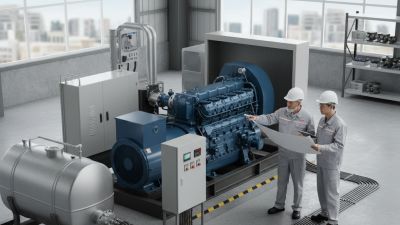

Choosing the right Yuchai Generator Set requires more than comparing rated power and purchase price. A reliable decision begins with the site’s actual electrical demands. Record essential loads, starting currents, operating hours, and future expansion plans. Motors, pumps, compressors, and refrigeration equipment may briefly require much more power than their running ratings suggest. That detail matters.
Field experience shows that operating conditions can change the result. Consider altitude, temperature, humidity, dust, fuel quality, and ventilation before selecting an engine configuration. A generator working beside a dusty workshop needs different protection from one installed in a clean indoor facility. Standby and prime-power applications also require different sizing methods. Oversizing may increase fuel waste and reduce efficient loading, while undersizing can cause overheating and unstable performance.
A professional evaluation should include alternator quality, control-system functions, noise expectations, service access, and spare-parts availability. Confirm local electrical requirements and applicable emissions standards with qualified suppliers. Ask for documented performance data, warranty terms, commissioning support, and maintenance schedules. These details reveal whether the equipment can deliver dependable power beyond the sales brochure.
No single model fits every site. A neat calculation can still hide an overlooked starting load. Recheck the assumptions. If possible, perform a load study and discuss the results with an experienced Yuchai distributor or generator technician. The best Yuchai Generator Set balances capacity, efficiency, durability, serviceability, and long-term operating cost. It should also remain practical when conditions become less than ideal.
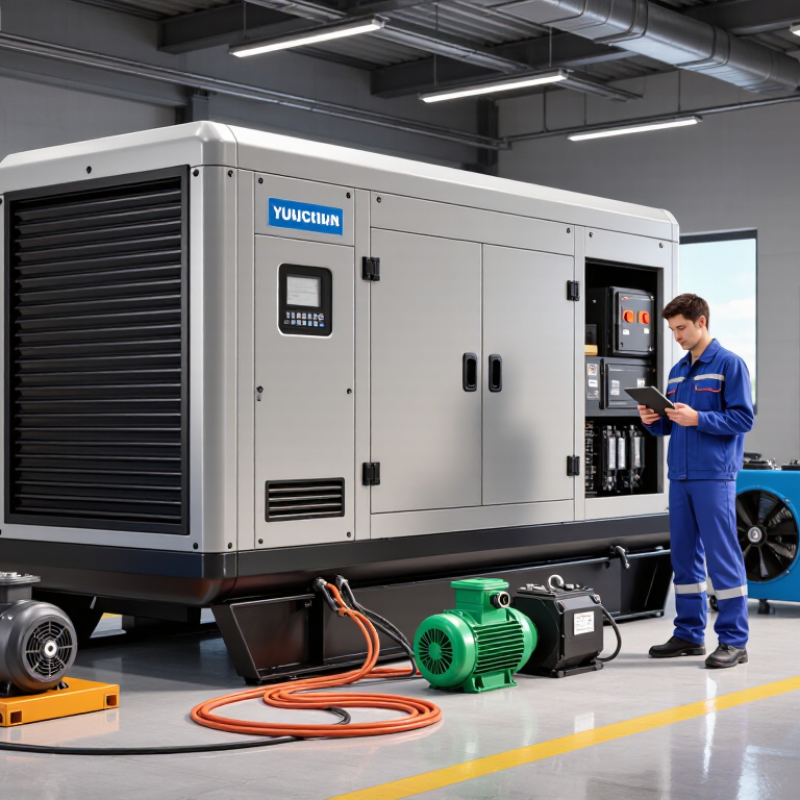
Start with the real load, not the nameplate total. Prime power supports changing loads for extended operation, while standby power covers emergency outages. ISO 8528-1 separates these ratings and limits their intended use. A generator running continuously at 90% load may overheat, consume more fuel, and age faster. A unit operating below 30% load can also suffer poor combustion and carbon buildup. Measure pumps, compressors, lighting, and control systems during a typical day.
Frequency matters as much as capacity. Equipment designed for 50 Hz may perform poorly at 60 Hz, especially motors, transformers, and cooling fans. The International Energy Agency reported that data centres used about 460 TWh of electricity globally in 2022, with demand potentially exceeding 1,000 TWh by 2026. This growth highlights the need for stable frequency during transfer events. Confirm the local grid standard before selecting alternator speed, protection settings, and automatic transfer equipment.
Do not guess.
Record starting currents and short peaks. A motor may briefly demand several times its running current. That surge can trip protection or slow the generator below its acceptable frequency. In practice, many sizing errors come from ignoring future expansion. I have seen a seemingly adequate set fail after one additional pump was installed. Recheck the profile annually, and question whether the standby rating truly matches the site’s critical loads.
(Sources: ISO 8528-1; International Energy Agency, Electricity 2024.)
Choosing the right generator set starts with the real electrical load, not only the equipment label. A site may require 160 kW of useful power, but the generator is commonly rated at 200 kVA. This matches the standard 0.8 power factor, because 200 kVA × 0.8 equals 160 kW. The basic formula is kW = kVA × power factor. For a 100 kW load, 125 kVA is the minimum theoretical rating at 0.8 power factor.
Real sites are less tidy. Motors, pumps, compressors, and transformers can draw high starting current. That brief surge may trip an undersized set, even when the running load looks safe. Record running and starting values with a power meter when possible. Leave practical capacity for future loads, but avoid excessive oversizing. A lightly loaded engine may operate inefficiently and build up maintenance concerns.
Check whether the application is standby or prime power. Confirm voltage, frequency, phase configuration, altitude, ambient temperature, and allowable voltage dips. At a hot construction site, reduced cooling performance can affect available output. I have seen load estimates fail because temporary heaters were forgotten. That mistake is easy to repeat. Review the load schedule with a qualified electrical professional, then verify performance during commissioning with measured kW, kVA, current, and power factor.
When choosing a diesel generator set, emissions compliance should be checked before comparing price or output. Confirm whether the installation requires EPA Tier 4 Final or EU Stage V certification. The correct standard depends on the country, site location, power category, and local permitting rules. Do not rely on a sales brochure alone.
Request the engine family certificate, emissions test data, and conformity documents. Check that the certified engine matches the offered configuration, including rated speed and aftertreatment system. EPA Tier 4 Final equipment commonly uses diesel particulate filters and selective catalytic reduction. EU Stage V systems may also require particulate-number compliance. These systems need clean fuel, suitable engine oil, and correct exhaust temperatures. Some models use diesel exhaust fluid, often called AdBlue. Plan storage and refilling before delivery.
Look closely at the operating environment. Frequent low-load running can prevent proper aftertreatment regeneration. Cold weather, dusty air, and long standby periods may create additional maintenance demands. Ask how faults are displayed and whether service technicians can read diagnostic codes. Small details matter. A missing document can delay approval. A neglected filter can increase downtime. It is tempting to select the newest emissions label and stop there, but that approach is incomplete. Recheck the permit requirements with a qualified local engineer, especially when the generator will serve a hospital, construction site, or urban facility. Compliance is not only a specification; it is an operating responsibility.
When choosing a diesel generator set, compare fuel consumption at the same operating point. A 75% rated load offers a practical reference for offices, workshops, and backup systems. Testing at this level also reveals how efficiently the engine handles a steady demand.
Check the fuel rate in litres per hour, not only the advertised fuel economy. For example, a 100 kW generator operating at 75 kW may consume 18–24 litres per hour, depending on engine design, ambient temperature, and maintenance. These figures are examples, not guarantees. Use verified test data from a controlled load-bank test. Measure the real load. Small errors matter.
Runtime depends on usable tank capacity and measured fuel consumption. A 500-litre tank divided by 21 litres per hour provides about 23.8 hours before refuelling. Keep an operating reserve, because draining a tank completely can introduce sediment or air into the fuel system. Compare two sets under identical conditions, including fuel temperature, power factor, and site elevation. A neglected air filter can increase consumption, while an oversized generator may run inefficiently at lighter loads. I have seen estimated runtime fall several hours after a dusty-site installation. That result is easy to overlook. Ask for maintenance intervals, recorded fuel tests, and load-performance data before making a purchase.
Compare fuel consumption and estimated runtime at 75% rated load. The comparison uses typical performance values for modern diesel generator sets and assumes a 500-liter usable fuel tank.
Larger generator sets generally consume more fuel per hour, but selecting a unit close to the actual load can improve operating efficiency. Estimated runtime is calculated as usable tank capacity divided by fuel consumption at 75% load. Actual results vary with engine condition, ambient temperature, fuel quality, and site elevation.
Choosing the Right Generator Set
ISO 8528 ratings should match the site’s real operating pattern, not only its maximum load. A standby rating may suit occasional outages. Prime power fits locations with extended or variable operation. Continuous power serves steady loads with few interruptions. Review motor starting current, nonlinear loads, and future expansion before selecting the rating.
The ten-second requirement demands closer attention. Under NFPA 110, many Level 1 emergency systems must restore power within ten seconds after normal supply failure. The generator must start quickly, stabilize voltage and frequency, and support the automatic transfer switch. Test this sequence under realistic load conditions. A no-load demonstration can hide weak performance.
Check fuel quality, battery condition, coolant temperature, and starting-air systems where applicable. Keep transfer-test records and confirm inspection duties with the authority having jurisdiction. In practice, installation details often decide whether the target is met. Cable distance, undersized conductors, or poor ventilation can delay dependable operation.
One detail deserves a second look: the largest motor may not start first. Elevators, pumps, and fans can create overlapping demand. I would model those steps instead of trusting a simple total-load calculation. The calculation may be correct, yet incomplete. Room for error matters.
| Selection Dimension | Relevant Standard or Rating | What It Means | Typical Application | What to Verify Before Selection |
|---|---|---|---|---|
| Operating Duty | ISO 8528-1: COP | Continuous power available for an unlimited number of hours at a constant load. The load factor and maintenance requirements must follow the manufacturer’s declared conditions. | Base-load or prime-power systems operating continuously at a stable demand. | Confirm the expected daily operating hours, constant-load profile, ambient conditions, and required maintenance intervals. |
| Operating Duty | ISO 8528-1: PRP | Prime power available for an unlimited number of hours with a variable load. The applicable average load factor and operating limits are defined by the manufacturer. | Standby-independent sites, construction, remote facilities, and variable-load applications. | Compare the actual load profile with the declared PRP limits; do not treat PRP as unlimited power at full rated output. |
| Operating Duty | ISO 8528-1: ESP | Emergency standby power available during utility interruptions. It is intended for variable emergency loads and is not normally used for continuous utility-parallel operation. | Backup power for commercial buildings, data rooms, communications systems, and essential services. | Check the permitted annual operating hours, emergency load sequence, environmental derating, and local regulations. |
| Short-Term Capacity | ISO 8528-1: LTP | Limited-time running power available for a restricted number of hours at a declared load. It is not a substitute for a continuous or prime-power rating. | Short-duration peak support or temporary power where the operating schedule is strictly controlled. | Verify the maximum annual running time, allowable load, cooling capability, and whether the intended duty actually qualifies. |
| Performance Class | ISO 8528-5: G1 | Basic performance requirements for loads that have limited sensitivity to voltage and frequency variations. | General lighting and uncomplicated resistive or non-critical loads. | Confirm that connected equipment can tolerate the declared voltage, frequency, and recovery characteristics. |
| Performance Class | ISO 8528-5: G2 | Performance suitable for loads with moderate requirements for voltage and frequency regulation during loading and unloading. | Common commercial and industrial loads, including many motor-driven systems. | Review motor-starting voltage dip, step-load response, frequency recovery, and voltage recovery data. |
| Performance Class | ISO 8528-5: G3 | More demanding performance for loads that require tighter control of voltage, frequency, and waveform behavior. | Telecommunications, process controls, variable-speed drives, and sensitive electronic equipment. | Request test data for transient voltage dip, frequency deviation, recovery time, harmonic distortion, and unbalanced loads. |
| Performance Class | ISO 8528-5: G4 | The most demanding ISO 8528 performance class, intended for applications with exceptional requirements for voltage and frequency stability. | Highly sensitive electronic, laboratory, medical, or specialized industrial systems. | Confirm that the complete system—not only the engine-generator—can meet the required power-quality limits. |
| Emergency Transfer | NFPA 110: Level 1, Type 10 | The emergency power supply system must be capable of supplying the load within 10 seconds after loss of the normal power source. The requirement applies to the complete emergency power system and its transfer equipment. | Facilities where failure of the emergency system could result in loss of life or serious injury. | Verify the automatic transfer switch rating, generator start sequence, breaker or contactor timing, load blocks, and witnessed test results. |
| Emergency Transfer | NFPA 110: Level 2 | Used where failure of the emergency power system is not considered to be immediately life-threatening. The required performance depends on the adopted code and project specifications. | Non-life-safety commercial, institutional, or industrial applications. | Identify whether the authority having jurisdiction requires a specific transfer time, testing program, fuel reserve, or equipment classification. |
| Load Acceptance | ISO 8528-5 transient performance | Describes how voltage and frequency respond when loads are connected or disconnected. A generator with sufficient kW may still fail if it cannot accept the load step correctly. | Systems with large motors, pumps, elevators, compressors, HVAC equipment, or block-loaded essential circuits. | Provide the load-step sequence, motor-starting method, locked-rotor current, largest single load, and required recovery limits. |
| Capacity Calculation | kW, kVA, power factor, and starting demand | Generator size must account for real power, apparent power, power factor, nonlinear loads, motor starting, future expansion, and load sequencing. | All installations, especially systems with mixed motor, electronic, and resistive loads. | Prepare a load schedule and confirm running kW, running kVA, starting kVA, diversity, harmonic content, and required reserve margin. |
| Environmental Derating | Manufacturer-declared rating conditions | High altitude, high ambient temperature, humidity, restricted airflow, and exhaust-system back pressure can reduce available output or affect starting performance. | Outdoor enclosures, rooftop installations, hot climates, high-elevation sites, and confined plant rooms. | Obtain derating curves for the actual site altitude and temperature; check radiator airflow, ventilation, fuel, and exhaust limits. |
| Fuel Autonomy | Project specification and local code | Fuel-tank capacity must support the required emergency runtime while allowing for usable capacity, fuel quality, temperature effects, and replenishment logistics. | Hospitals, emergency facilities, remote sites, data centers, and locations exposed to extended utility outages. | Calculate runtime at the expected emergency load, not only at full rated load, and verify tank, piping, ventilation, and fire-safety requirements. |