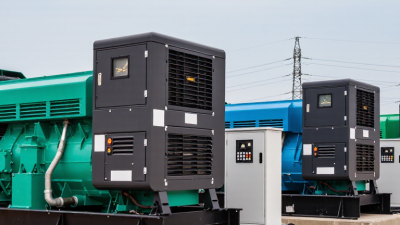

China’s Silent Generator Set industry has grown through practical engineering, disciplined manufacturing, and strong export experience. This article introduces ten leading Chinese manufacturers serving construction, healthcare, telecommunications, data centers, and commercial facilities. Their products typically combine diesel engines, alternators, acoustic enclosures, control panels, and vibration-reduction systems.
Performance matters beyond brochure ratings. A reliable unit should start smoothly at low temperatures, maintain stable voltage, and control noise near occupied buildings. Fuel consumption, spare-parts access, warranty support, and testing procedures also deserve careful attention. Some manufacturers focus on compact 20 kVA systems, while others build containerized units exceeding 2,000 kVA. The differences become obvious on a real project site.
Not every “top” list is absolute. Manufacturer rankings can change with certification, delivery performance, regional service, and customer feedback. That deserves reflection. A factory with impressive production capacity may still provide limited support overseas. Therefore, this overview considers company background, product quality, customization ability, international experience, and after-sales reliability. It also highlights practical questions buyers should ask before signing a contract, including factory inspection, load-bank testing, noise measurements, and replacement-part availability.
Details matter most.
The selected companies are discussed with a balanced perspective rather than simple promotion. Their strengths, limitations, typical applications, and technical positioning are compared in clear terms. Readers can use this information to narrow their choices, request accurate quotations, and match a Silent Generator Set with actual operating conditions. The final decision should follow verified specifications, independent testing, and project-specific engineering advice.
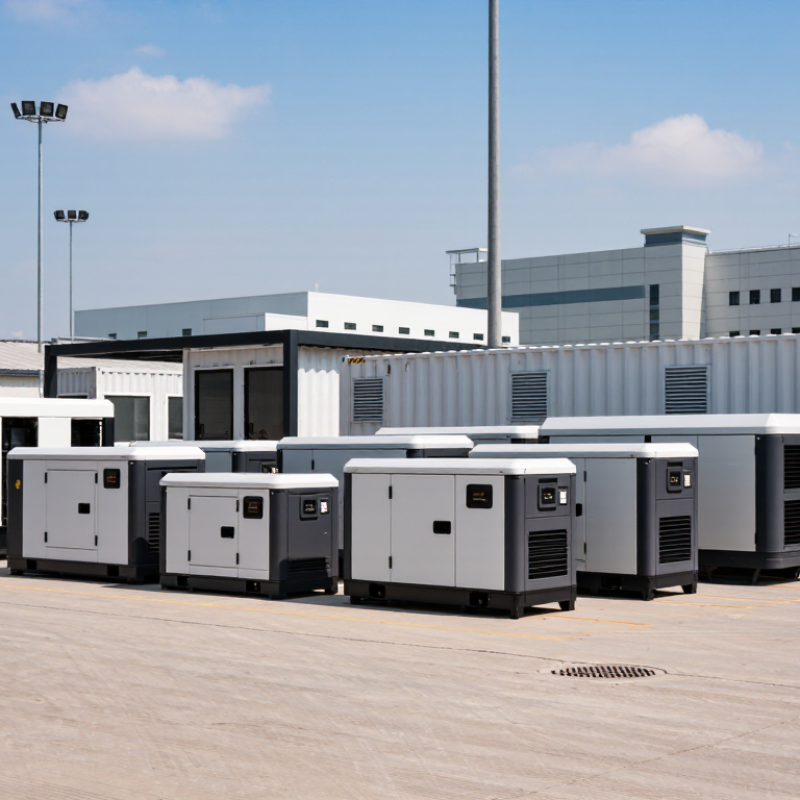
Silent generator sets are not truly silent. They are power units fitted with acoustic enclosures, mufflers, vibration isolators, and airflow controls. These features reduce engine noise for hospitals, hotels, construction sites, and residential facilities. The World Health Organization’s Environmental Noise Guidelines for the European Region recommends keeping nighttime outdoor noise below 40 dB Lnight. That target explains why sound reduction matters near sleeping areas.
The International Energy Agency’s Electricity 2024 report forecasts global electricity demand will grow by about 4% annually from 2024 to 2026. More demand also increases the need for dependable backup power. Silent sets can support elevators, lighting, refrigeration, servers, and medical equipment during grid interruptions. In practical installations, technicians should check noise levels at property boundaries, not only beside the generator.
The label can mislead.
Acoustic panels reduce noise, but they may restrict cooling airflow. Poor ventilation can raise engine temperature, fuel consumption, and maintenance risk. A professional assessment should therefore review load capacity, enclosure design, exhaust routing, ambient temperature, and maintenance access. The U.S. Environmental Protection Agency also emphasizes controlling diesel emissions through compliant engines and proper operating practices. Noise performance is important, but reliability should not be sacrificed for a quieter cabinet.
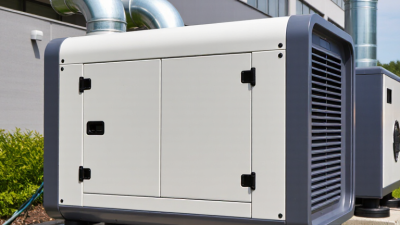
Silent generator sets use acoustic canopies, vibration isolation and optimized exhaust systems to reduce operating noise. They are commonly used at construction sites, residential areas, hospitals, offices and outdoor events.
Typical A-weighted sound-pressure ranges measured approximately 7 metres from the generator set. Actual results vary with generator size, electrical load, installation conditions and measurement environment.
China’s silent generator sector is judged by more than catalog power ratings. MarketsandMarkets forecasts the global generator sales market to grow at roughly 6% annually through 2029. The IEA also expects global electricity demand to rise by 3.4% each year through 2026. These figures support continued demand for dependable backup systems, especially in construction, healthcare, manufacturing, and data centers.
The top ten should be selected through a transparent scoring model. Production capacity matters, but verified delivery records matter more. Auditors should examine factory quality systems, engine-generator matching, enclosure design, and spare-parts response. Test reports should record noise levels at seven meters, fuel consumption at 50%, 75%, and 100% load, voltage stability, and transient recovery. ISO 8528 provides a useful technical reference for comparing generator performance. Independent laboratory evidence is stronger than promotional claims.
Compliance should also include documented environmental testing and applicable national standards. TÜV Rheinland’s 2024 industrial research highlights traceability and supplier quality as major purchasing concerns. That is relevant here. A lower price can hide weaker acoustic insulation or difficult maintenance access. Small details matter. Door hinges, cable outlets, drain points, and emergency-stop placement deserve inspection.
The comparison still has limits. Published test conditions are not always identical, and some field data remains incomplete. Therefore, rankings should show uncertainty instead of pretending to be absolute. A practical shortlist combines audited records, witnessed load tests, warranty terms, service coverage, and five-year operating cost. Percentages alone are not enough.
China’s top 10 silent generator set manufacturers represent different production strengths and market specialties. One focuses on compact diesel units for construction sites. Another builds high-capacity systems for hospitals and data centers. A third is known for strict acoustic enclosure testing. One manufacturer serves export projects with multilingual documentation. Another develops customized control panels for factories. A sixth offers rental-ready sets with reinforced frames and lifting points.
The remaining manufacturers often compete through practical engineering. One specializes in fuel-efficient prime-power systems. Another supports remote monitoring and automatic transfer controls. A ninth focuses on marine and high-humidity applications. The tenth provides flexible assembly for unusual voltage requirements. These profiles should be checked against factory audits, test records, warranty terms, and local service coverage. Product photographs alone are weak evidence. In my experience, impressive specifications can hide limited spare-parts support. That deserves careful review.
Tips: Ask for measured noise data, not general claims. Confirm testing conditions, load percentages, and distance. Inspect welds, door seals, radiator airflow, and emergency-stop access. Request a sample maintenance schedule. Also verify whether technicians can respond within your operating region. A quieter enclosure may restrict cooling if poorly designed. This detail is easy to overlook.
Comparing China’s top 10 silent generator set manufacturers requires more than checking rated output.
Power range often separates specialists from general suppliers. Some focus on compact 10–100 kVA units for shops, clinics, and construction sites. Others support 500–2,500 kVA systems for factories, data centers, and emergency infrastructure. A buyer should match standby and prime power ratings, not confuse them.
Technology differences become clear during practical testing.
Modern sets may use digital controllers, automatic transfer functions, remote monitoring, and improved acoustic insulation. Engine cooling design matters in dusty or high-temperature locations. Fuel consumption at 50% load can reveal more than a peak efficiency claim. Sound levels should be measured at a stated distance, because testing conditions vary. Clean wiring helps technicians diagnose faults faster. Small details matter.
Service capability is often the real dividing line.
Reliable manufacturers provide load-bank testing, installation guidance, spare-parts planning, and documented maintenance intervals. Response time should be confirmed in writing, especially for remote projects. Local technicians may reduce downtime, but their experience can differ greatly. A polished factory tour does not prove field performance. I would request operating records, controller screenshots, and references from similar sites. Even then, comparisons are imperfect; climate, fuel quality, and operator habits can change results. A low purchase price may become expensive when filters, batteries, and service visits are difficult to obtain.
How to Choose the Right Chinese Silent Generator Set Manufacturer
Choosing a Chinese silent generator set manufacturer requires more than comparing online prices. In practical projects, enclosure design, engine matching, and service response affect long-term value. Ask for rated and standby power, fuel consumption, noise data, and operating conditions in writing. Shortlist factories that explain limitations clearly. Honest details matter.
Request a live load-bank test before ordering. Check voltage stability, frequency control, exhaust temperature, vibration, and emergency shutdown performance. Inspect the acoustic enclosure, hinges, cable glands, cooling path, and rain protection. A quiet set is not useful if heat builds inside. Ask whether noise readings follow a stated test method and distance. Documents should include inspection records, wiring diagrams, manuals, and traceable component data. Verify quality systems and applicable market certifications independently, not only through sales brochures.
Evaluate after-sales support with practical questions. Where are spare filters, belts, controllers, and sensors stored? Who responds during a night-time fault? Request service timelines, technician qualifications, warranty exclusions, and remote diagnosis procedures. A manufacturer should provide commissioning guidance and maintenance schedules suited to your climate. A common purchasing mistake is focusing on the lowest quotation while overlooking installation details. That is an expensive lesson. Ask for references from installations with similar loads, temperatures, and duty cycles. If a factory avoids a site visit or refuses a sample test, pause the purchase. Good cooperation is measurable before the contract is signed.
| No. | Evaluation Dimension | Practical Benchmark | Information to Request from the Manufacturer | Importance | Warning Signs |
|---|---|---|---|---|---|
| 1 | Rated Output and Load Performance | The generator should meet the required prime or standby rating at the intended altitude, ambient temperature, and duty cycle. A continuous operating margin of approximately 10% is commonly recommended. | ISO 8528 performance data, load-bank test results, fuel-consumption figures at 25%, 50%, 75%, and 100% load, and derating charts. | Critical | Only stating maximum kVA without clarifying prime, standby, or continuous rating. |
| 2 | Noise-Control Performance | A quality silent enclosure commonly targets approximately 65–75 dB(A) at 7 metres for many medium-size sets, although actual results vary by output, engine, cooling system, and test conditions. | Third-party or factory acoustic test report specifying distance, load percentage, measurement method, and environmental conditions. | Critical | Using “silent” as a marketing term without a measured dB(A) value or test distance. |
| 3 | Engine and Alternator Matching | The engine, alternator, governor, and control system should be selected as a matched system to maintain voltage and frequency stability under sudden load changes. | Technical datasheets, transient-response data, alternator efficiency, insulation class, voltage-regulation figures, and factory configuration records. | Critical | Changing core components without updating the performance, wiring, or protection documentation. |
| 4 | Standards and Certification | The set should be designed and tested against applicable requirements such as ISO 8528, ISO 3744 for acoustics, IEC 60034 for rotating electrical machines, and the destination market’s electrical and emissions rules. | Certificates with matching model numbers, declarations of conformity, test reports, wiring diagrams, and applicable export documentation. | Critical | Certificates that apply only to a different model, factory, or component rather than the supplied set. |
| 5 | Enclosure and Weather Protection | The enclosure should use corrosion-resistant treatment, a rainproof roof, secure access panels, sufficient ventilation, and service openings. Electrical protection should be suitable for the installation environment. | Material thickness, coating process, paint system, ingress-protection rating of electrical parts, ventilation calculations, and salt-spray or coating test information. | Critical | Thin panels, poor door sealing, exposed fasteners, sharp edges, or inadequate hot-air discharge design. |
| 6 | Fuel Efficiency and Operating Cost | Compare litres per hour and litres per kWh at the same load point. Medium and large diesel sets generally operate most efficiently around moderate-to-high load rather than at very light load. | Fuel-consumption curves, recommended minimum loading, oil-change intervals, service-part prices, and estimated annual operating cost. | Critical | Providing fuel consumption only at full load or quoting figures without the test conditions. |
| 7 | Cooling, Ventilation, and High-Temperature Operation | The cooling system should be sized for the local ambient temperature and installation conditions. Capacity may require derating in high-temperature or high-altitude locations. | Radiator capacity, maximum design ambient temperature, altitude derating tables, airflow calculations, and hot-air recirculation safeguards. | Critical | No derating data or no explanation of how enclosure ventilation affects engine and radiator performance. |
| 8 | Control System and Safety Protection | The control panel should provide monitoring and protection for low oil pressure, high coolant temperature, overspeed, overcurrent, under/over-voltage, under/over-frequency, emergency stop, and battery charging. | Controller manual, protection-setting list, alarm history screenshots, single-line diagram, and automatic transfer or remote-monitoring interface details. | Critical | Limited alarms, unclear protection settings, password restrictions, or no documented interface protocol. |
| 9 | Quality Control and Factory Testing | Each completed set should undergo inspection and functional testing before shipment. Larger or mission-critical projects should include witnessed load-bank testing. | Factory acceptance test template, serial-number traceability, inspection checklist, load-bank capacity, nonconformance procedure, and sample test records. | Critical | The supplier cannot provide a complete test record or refuses model-specific inspection before shipment. |
| 10 | Warranty, Spare Parts, and Technical Support | A clear warranty commonly defines coverage by time and operating hours, with replacement-part availability and troubleshooting support for the destination country. | Written warranty terms, recommended spare-parts list, service response times, commissioning plan, maintenance schedule, and remote-support procedure. | Important | Verbal warranty promises, undefined exclusions, unavailable parts, or no local service escalation process. |
Reference note: Technical values are typical industry benchmarks rather than guarantees for every model. Always verify the final specification, test conditions, certifications, and installation requirements for the exact generator set being purchased.