How to Choose a Silent Generator Set in 2026?
Choosing a Silent Generator Set in 2026 requires more than comparing advertised noise levels. A quiet enclosure may hide weak ventilation, difficult maintenance access, or poor performance under heavy loads. The best decision begins with the real operating environment: a hotel courtyard, construction site, hospital backup room, or residential property. Each location has different acoustic, safety, and power requirements.
Field technicians often recommend recording the expected load throughout a typical day. A 40-kilowatt demand at startup can matter more than a lower average load. Check the generator’s rated and standby output, fuel consumption, automatic transfer switch compatibility, and cooling design. Ask how noise was measured, including distance, load percentage, and weather conditions. A claim of 62 decibels at seven meters may not represent nighttime performance beside a bedroom window.
Small details matter.
Inspect the hinges. Review the service clearances. Listen for vibration.
Reliable manufacturers provide test records, maintenance schedules, warranty terms, and clear technical documentation. They should also explain compliance with local electrical, emissions, and workplace noise requirements. Independent certification can strengthen confidence, but paperwork alone cannot replace a practical site assessment. The quietest model is not always the most suitable one. An oversized engine may waste fuel, while an undersized unit can overload during motor starting.
There is no perfect purchase. Even experienced buyers can focus too heavily on decibels and overlook long-term service access. In 2026, a dependable Silent Generator Set should balance quiet operation, verified power delivery, efficient fuel use, safe installation, and support that remains available after commissioning.
Define Silent Generator Sets: 60–75 dB(A) at 7 m and ISO 8528 Ratings
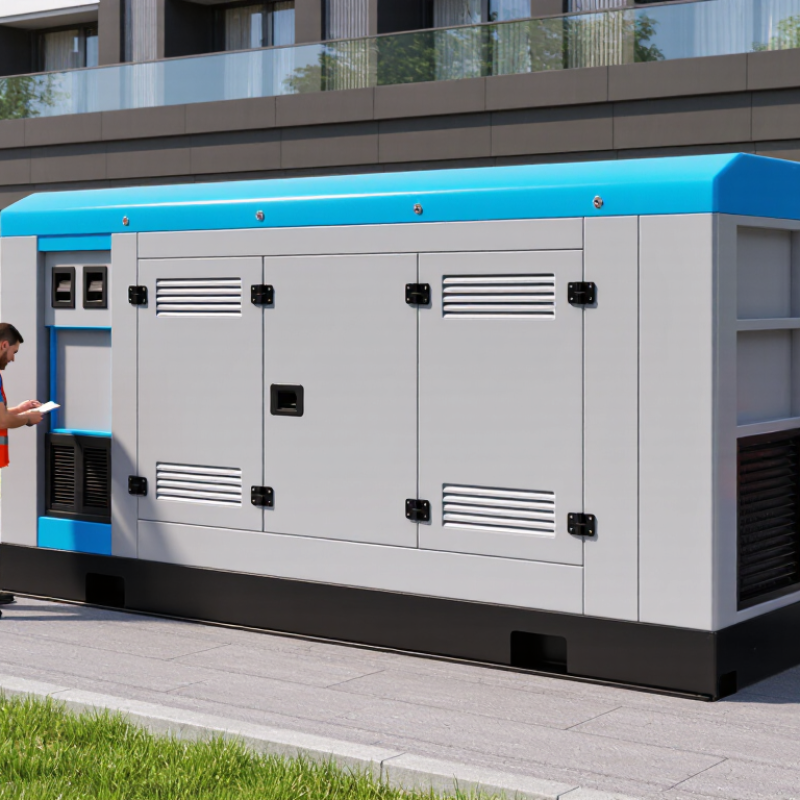
A silent generator set is not truly silent. In practical specifications, the term usually describes a machine producing about 60–75 dB(A) at 7 metres. This range resembles heavy traffic or a busy office, not a quiet bedroom. The “A” weighting reflects how human hearing responds to different frequencies. Distance, weather, walls, and ground surfaces can change the measured result.
Ask how the sound level was tested. A reliable supplier should state the load, operating mode, test distance, and measurement method. A set rated at 62 dB(A) during light load may become noticeably louder near full output. Cooling fans, exhaust flow, and enclosure panels all affect the result. Small details matter. I have seen specifications that looked excellent until installation placed the unit beside a concrete wall.
ISO 8528 ratings help define electrical performance, but they do not automatically prove quiet operation. Prime Power supports variable loads over extended periods. Continuous Power suits steady loads. Emergency Standby Power is intended for backup use, with limited operating hours.
Match the rating to the site’s real demand, including motor starting and sudden load changes. A generator may pass a factory test yet perform poorly in a cramped compound. That is an uncomfortable possibility, but it deserves attention.
Check acoustic data, fuel consumption, ventilation requirements, and local noise limits together. A lower decibel number alone is not enough.
Calculate Capacity: Target 70–80% Prime Load and 20–30% Reserve
Choosing a silent generator set should begin with capacity, not the enclosure design. A quiet machine still fails when its load calculation is careless.
Start with the prime load. List lighting, pumps, cooling equipment, computers, and battery chargers. Prime load means the demand the generator must carry for extended operation. Aim to run it at 70–80% of rated prime capacity. Keep 20–30% available as reserve. This range supports efficiency while leaving room for temporary increases. An oversized unit may operate lightly, waste fuel, and develop maintenance problems. I have seen estimates fail because idle equipment was counted as active demand.
Build a load table from measured readings whenever possible. Nameplates help, but they do not show actual operating patterns. Do not trust labels alone. Record running watts, power factor, and motor starting current. A facility drawing 80 kW may need a 100 kW prime-rated set for an 80% operating target. Yet this simple example can mislead. A large pump may demand several times its running current during startup. Use staged starting, soft starters, or a higher short-term capacity when necessary. Check the calculation with a qualified electrical professional.
Reserve capacity also covers future equipment, seasonal cooling, and unexpected peaks. Quiet does not mean unrestricted. High altitude, heat, blocked airflow, and acoustic panels can reduce output. Test the set under a realistic 70–80% load, then review voltage, frequency, temperature, and noise readings. Real sites are imperfect. Your first estimate may need revision.
Check Emissions: EPA Tier 4 Final, EU Stage V, and 2026 Regulations
Choosing a silent generator set in 2026 requires more than checking its noise rating. Emissions compliance should guide the purchase from the beginning. For many nonroad diesel applications, EPA Tier 4 Final limits particulate matter and nitrogen oxides through advanced aftertreatment systems. In Europe, EU Stage V applies similarly strict limits, including particle-number controls for applicable engines.
Ask for the engine’s official emission certificate, not a sales-page promise. Confirm the exact engine family, rated power, duty cycle, and intended operating region. A set designed for one market may not satisfy another market’s registration rules.
Local authorities may also require permits, emissions testing, fuel records, or restrictions near hospitals and residential areas in 2026. Regulations are not uniform.
The acoustic enclosure deserves careful inspection. Poor airflow can raise exhaust temperatures, increase backpressure, and interfere with regeneration. Check whether the silencing design preserves cooling performance under continuous load. Review maintenance access for diesel particulate filters, selective catalytic reduction systems, and sensors. Ask how the controller reports faults. Small details matter.
I would test the generator at 25%, 50%, and 75% load before approval. Very light loading can create operational problems, even when paperwork looks correct. Request recent service records and a site-specific noise measurement. Compliance documents can be accurate, yet the installation may still fail local limits. That gap is easy to underestimate.
Verify Cooling: 40°C Ambient Ratings, Airflow, and Derating Requirements
How to Choose a Silent Generator Set in 2026?
A silent generator set must handle heat, not only reduce noise. Check its continuous output at a 40°C ambient temperature. Some units advertise rated power at cooler conditions, which can mislead buyers. Ask for the official derating curve, coolant temperature limits, and test conditions. I have seen enclosed sets lose capacity when hot air recirculates around the radiator. That detail is easy to miss. Confirm whether the 40°C rating applies at full load, specific altitude, and stated humidity.
Tips: Measure the installation space before ordering. Leave clear inlet and outlet paths. Inspect louver size, radiator airflow, fan control, and exhaust heat routing. A quiet enclosure can restrict ventilation if its acoustic panels are poorly designed. Look for airflow figures in cubic metres per minute, not vague claims such as “high efficiency.” Request temperature readings during a witnessed load test. Paper data alone is not enough.
Derating may become significant above 40°C or at high elevation. Ask how many kilowatts remain available at your actual site conditions. Review alarms for high coolant temperature, low coolant level, and fan failure. Check whether filters can be cleaned without removing major panels. Maintenance access affects real cooling performance over time. My own preference is conservative sizing, although it increases purchase cost. It also leaves room for blocked vents, aging fans, and unexpected summer heat.
Compare Ownership: Fuel Consumption, 500–1,000 h Service, and Warranty
Choosing a silent generator set in 2026 requires more than checking decibel ratings. Ownership cost begins with fuel. The U.S. Energy Information Administration estimates diesel contains about 137,000 Btu per gallon. A typical diesel set converts only part of that energy into electricity, so real consumption often reaches 0.25–0.30 liters per kWh at roughly 75% load. Light loading can increase fuel use per delivered kWh. That detail is easy to miss.
Service planning matters just as much. ISO 8528-1 defines generator performance and rating principles, but it does not guarantee identical maintenance intervals. Ask for a written schedule covering the 500-hour and 1,000-hour services. Oil, filters, coolant checks, belts, batteries, and load-bank testing can quickly change the ownership calculation. In my experience, a cheaper set becomes less attractive when technicians must travel long distances. The Uptime Institute Global Data Center Survey 2024 also highlights maintenance discipline as a practical factor in resilience, although its findings focus on critical facilities.
Warranty language deserves careful reading. Confirm whether coverage includes labor, transport, controller faults, and parts used during scheduled service. Some warranties require documented maintenance, and missed records may create disputes. A 2024 U.S. Energy Information Administration diesel price series shows why fuel-price sensitivity should be modeled, not guessed. Compare three scenarios: 500 operating hours, 1,000 hours, and heavy annual use. The uncomfortable question is simple: is the quietest set still economical after real service costs?
How to Choose a Silent Generator Set in 2026?
Ownership Comparison: Fuel Consumption, 500–1,000 h Service, and Warranty
This planning comparison uses typical silent diesel generator specifications for three common output classes.
Fuel consumption is measured at approximately 75% rated load. Service cost represents scheduled oil, filter,
inspection, and labor allowances across the first 1,000 operating hours, assuming service at approximately
500-hour intervals. Warranty duration is shown as a typical time limit; actual coverage may also include an
operating-hour limit, so tender documents should be checked carefully.